A rental kitchen has a different job than your own. It has to show well enough to rent fast, survive tenants who did not pay for it, and clean up between leases instead of needing a rebuild.
Here is where the money goes, in the order the decisions come up. If you are remodeling a kitchen you live in rather than rent out, the calculations are different — see our 2026 Bay Area kitchen design trends instead.
This saves more than every material choice below combined. Moving a sink means new drain and supply lines. Moving a range means a gas line or a 240-volt circuit. Moving a fridge means a water line and a cabinet rebuild. None of it is visible to a prospective tenant, and all of it is charged by the hour.
Keep the layout. Change the surfaces.
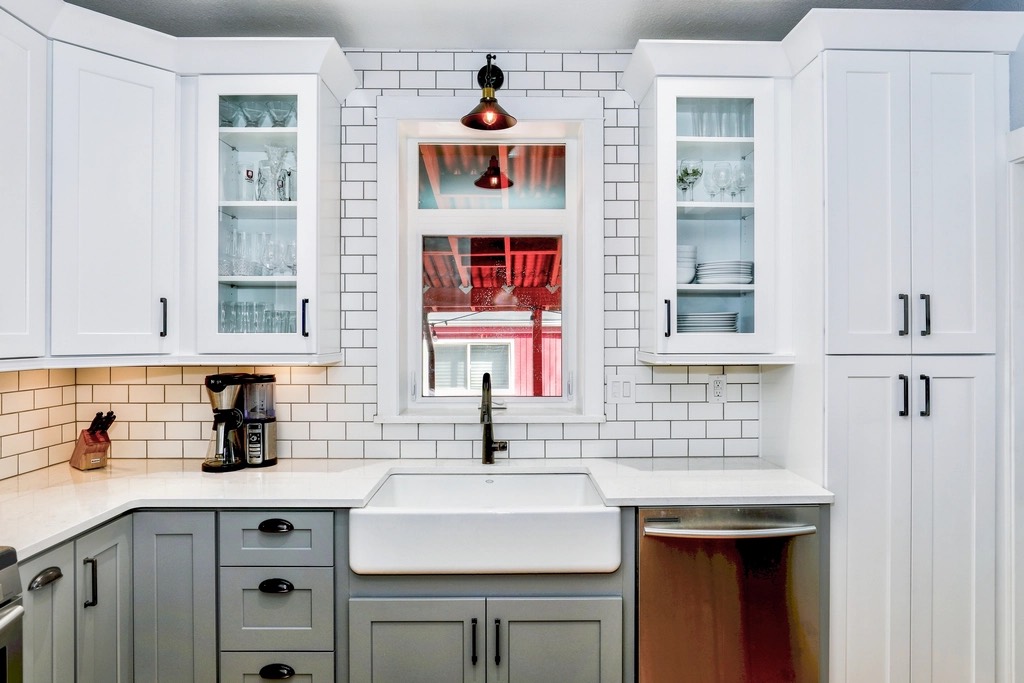
Cabinets are the biggest line item, so this is where a rental budget is won or lost. "Plywood" on a quote can mean several different things. The three you will actually be offered:
Use each where it earns its price:
Ask for 3/4 inch boxes, and do not pay for a top-grade face inside a cabinet nobody opens.
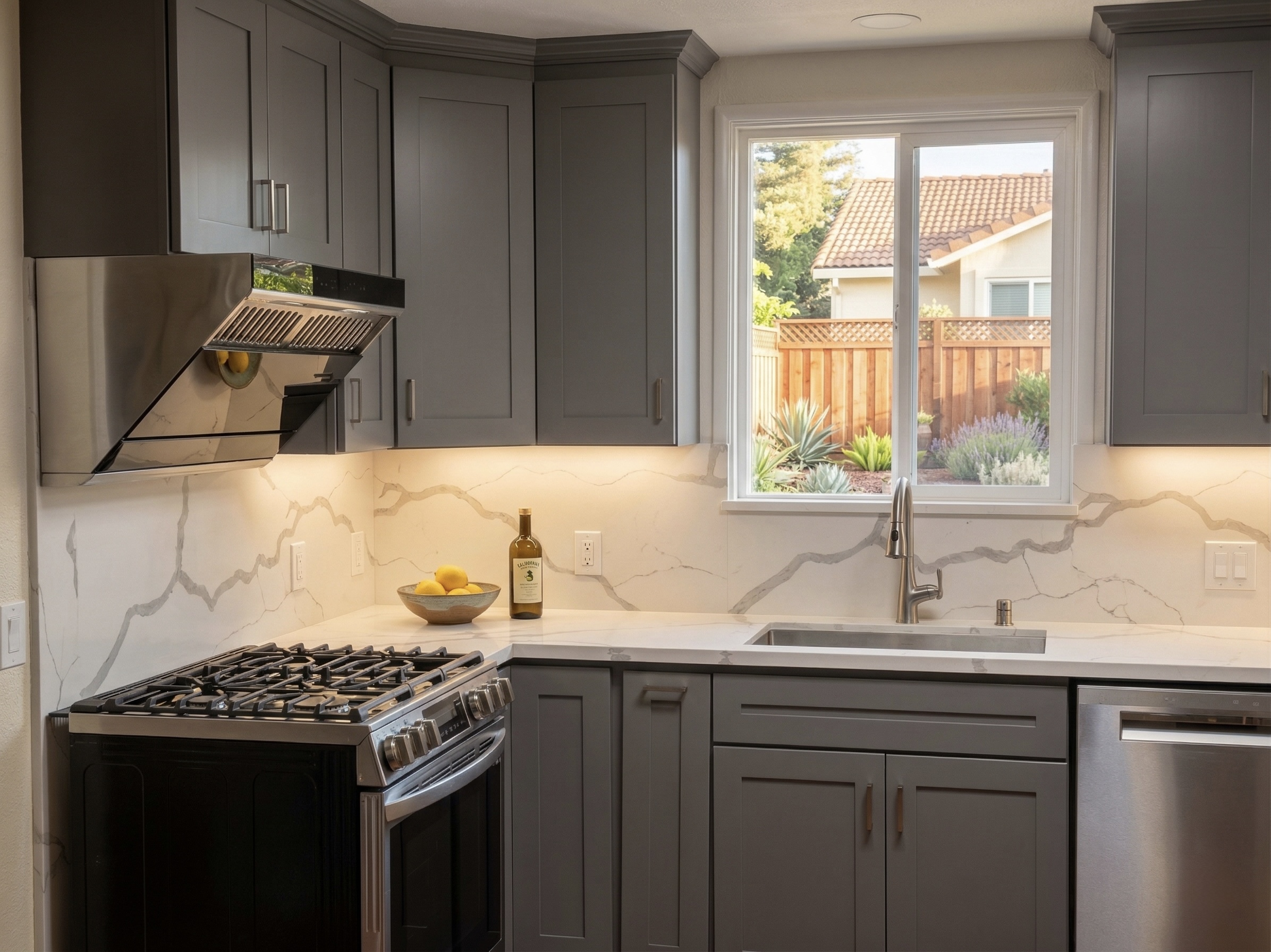
Quartz is the right rental countertop: it never needs sealing the way natural stone does, and it does not stain when a tenant leaves wine or oil sitting on it overnight. One honest caveat — it is heat resistant, not heatproof. The resin binding it can scorch under a pan taken straight off the burner, and that yellow-brown mark does not polish out. Leave a trivet in the drawer and mention it in the move-in notes.
One more thing worth asking about in California. Cutting ordinary engineered stone releases crystalline silica dust, and the state has a serious silicosis problem among countertop fabricators. Cal/OSHA already regulates artificial stone above 10% silica, and in May 2026 the Standards Board began rulemaking that would prohibit fabricating and installing anything above 1%. Nothing is banned today, but most major brands now sell a sub-1% low-silica line, and porcelain or sintered slabs skip the resin entirely. Ask your fabricator what they are cutting — it costs you nothing and it is the safer slab to own.
Then use the same quartz on the wall instead of tile. The labor to set a slab is far cheaper than the labor to install tile: one piece goes up in a single visit, where tile means setting every piece, spacing it, waiting, then coming back to grout and seal. Labor is the bigger half of a backsplash, so that is where the saving is.
Two more reasons it suits a rental:
The cheapest floor is the one already down. If it can be cleaned or patched, leave it — demolition is pure cost with nothing to show for it.
When it does have to go, skip tile. Click-lock planks go down in a day where tile needs mortar, spacers, curing and grouting, and they often float straight over the existing floor. No demolition, no disposal, and the unit re-lets sooner.
Whatever you pick, buy a thick wear layer. That single spec is the difference between a floor that survives three tenants and one that scuffs after the first. If you are set on tile anyway, our guide to tile types most likely to fail is worth reading first.
Flat paint cannot be scrubbed — grease lifts the finish off along with the dirt, so you repaint instead of wipe. Satin or eggshell on walls, semi-gloss on trim, doors and painted cabinetry. Look for a product rated scrubbable, not just washable.
Then write the brand, product line, color and sheen into the property file. Touching up a scuff two years later costs almost nothing if you know the color, and costs a whole wall if you do not.
Most older rental kitchens have one fixture in the middle of the ceiling. It puts the cook in their own shadow and makes the room read as dated in listing photos. Fixing that is cheap, and it shows up immediately in photographs.
Pick one cabinet door, one countertop, one floor, one paint color and one light fitting, and repeat them in every unit. You buy in larger quantities, your contractor prices a job they have already done, leftover plank from one unit patches another, and a damaged door has a match in your garage instead of a special order that holds up a turnover for weeks.
A rental kitchen that shows well and holds up is not the cheapest one you can build. It is the one that puts money where tenants create wear and takes it out of everywhere else. Leave the sink, range and fridge alone. Buy plywood where water is and a cheaper board where it is not. Run quartz up the wall instead of tiling it, and float a good vinyl plank over the floor that is already down.
Then spend a little on paint and light, because those are the two cheapest things in the room that change how the whole kitchen reads. Do that and you get a kitchen that rents quickly, cleans up between tenancies instead of needing rework, and does not ask for your attention again for a long time.
Golden Ridge Construction takes on a rental kitchen as one job — cabinets, countertop, backsplash, and flooring if the floor needs it. One quote, one crew, one schedule, instead of coordinating separate trades. See what else our kitchen remodeling service covers.
If you own a rental unit and want a fresh update at a low cost with a quick turnaround, get in touch. We will walk the kitchen, tell you what it actually needs, and price the whole thing together.
Call (408) 418-8376 or message us through the contact page. Licensed general contractor, License #1149928, serving the Bay Area.
It depends almost entirely on one thing: whether the layout moves. A surfaces-only refresh — cabinets, countertop, floor, paint and lighting with the sink, range and fridge left in place — costs a fraction of a full remodel, because the expensive trades barely get involved. The moment plumbing, gas or a new circuit is in scope, the number climbs quickly. Decide whether the layout stays before you ask anyone for a price.
Usually not for a cosmetic refresh. Replacing cabinets, countertops, flooring and paint within the existing layout generally does not require a building permit. Any electrical, plumbing, gas or structural change does — and that includes adding recessed lights or a new circuit. Requirements vary between cities, so confirm with your local building department before work starts rather than after.
In a rent-controlled unit, not automatically. Cities including San Francisco, Oakland and San Jose let owners petition the rent board to pass through part of a capital improvement, amortized over a set number of years and capped as a share of the rent. It is a formal petition with documentation, it takes months to resolve, and it commonly approves less than owners expect. Outside local rent control, most older California rentals still fall under AB 1482, which caps the annual increase at 5% plus regional CPI or 10%, whichever is lower — and local boards usually land well below that. Both figures reset every year, so check the current one before you budget around it. At turnover, an improved kitchen simply supports a higher asking rent.
Both, in different places. Laminated particleboard is genuinely cheaper and perfectly reasonable for dry runs, uppers and pantry boxes. Its weakness is water — when cabinets fail from a slow leak, particleboard is almost always what swelled while the plywood beside it survived the same event. So use plywood boxes at the sink base, the dishwasher run and against exterior walls, and save with particleboard everywhere a leak can never reach.
If the boxes are sound, do not replace them. Painting the doors and frames, or refacing with new doors and a matching veneer on the visible surfaces, buys most of the visual change for a fraction of new cabinets. Add new hardware, a scrubbable satin repaint and under-cabinet LED strip, and the room reads as renovated. Replacing boxes only makes sense when they are water-damaged, coming apart, or in a layout that genuinely does not work.
LVP for a kitchen. Laminate is the cheaper of the two, usually by a few dollars a square foot, and it looks much the same once it is down — but its core is wood fiber and swells when water sits in the seams, which is exactly what happens under a dishwasher or beside a sink. LVP is waterproof all the way through, so the same spill costs you nothing. Save the laminate for bedrooms. Either way, both click together and float over the existing floor, and the wear layer matters more than the brand.
To own and use, yes — the risk falls on the workers who cut it. Fabricating ordinary engineered stone releases crystalline silica dust, and California has recorded hundreds of silicosis cases among countertop fabricators. Cal/OSHA already regulates artificial stone above 10% silica, and in May 2026 the Standards Board opened rulemaking that would prohibit fabricating and installing anything above 1%. Nothing is prohibited today, but it is worth asking your fabricator what they cut and whether they can supply a low-silica slab. Most major brands now offer a sub-1% line, and porcelain or sintered stone is another route. It is also a fair question to ask about the shop's dust controls.
Better not to. Quartz is heat resistant, not heatproof — it is stone bound with resin, and that resin can scorch under a pan taken straight off the burner or out of the oven, leaving a yellow-brown mark that will not polish out. It handles everyday warmth without complaint, so this is not a reason to avoid it in a rental. Just leave a trivet in the drawer and put a line about it in the move-in notes, the same way you would for anything else a tenant might not think about.
For a rental, usually yes, and the reason is labor. Setting a slab costs far less to install than tiling the same wall: it goes up in one piece in a single visit, where tile means setting each piece, spacing it, waiting, then coming back to grout and seal. Order the backsplash off the same slab as your countertop and it comes out of material you have already bought. You also get a wall with no grout to scrub at every turnover, which is a recurring cost tile keeps charging you.